Historic Battle of Westport markers unveiled
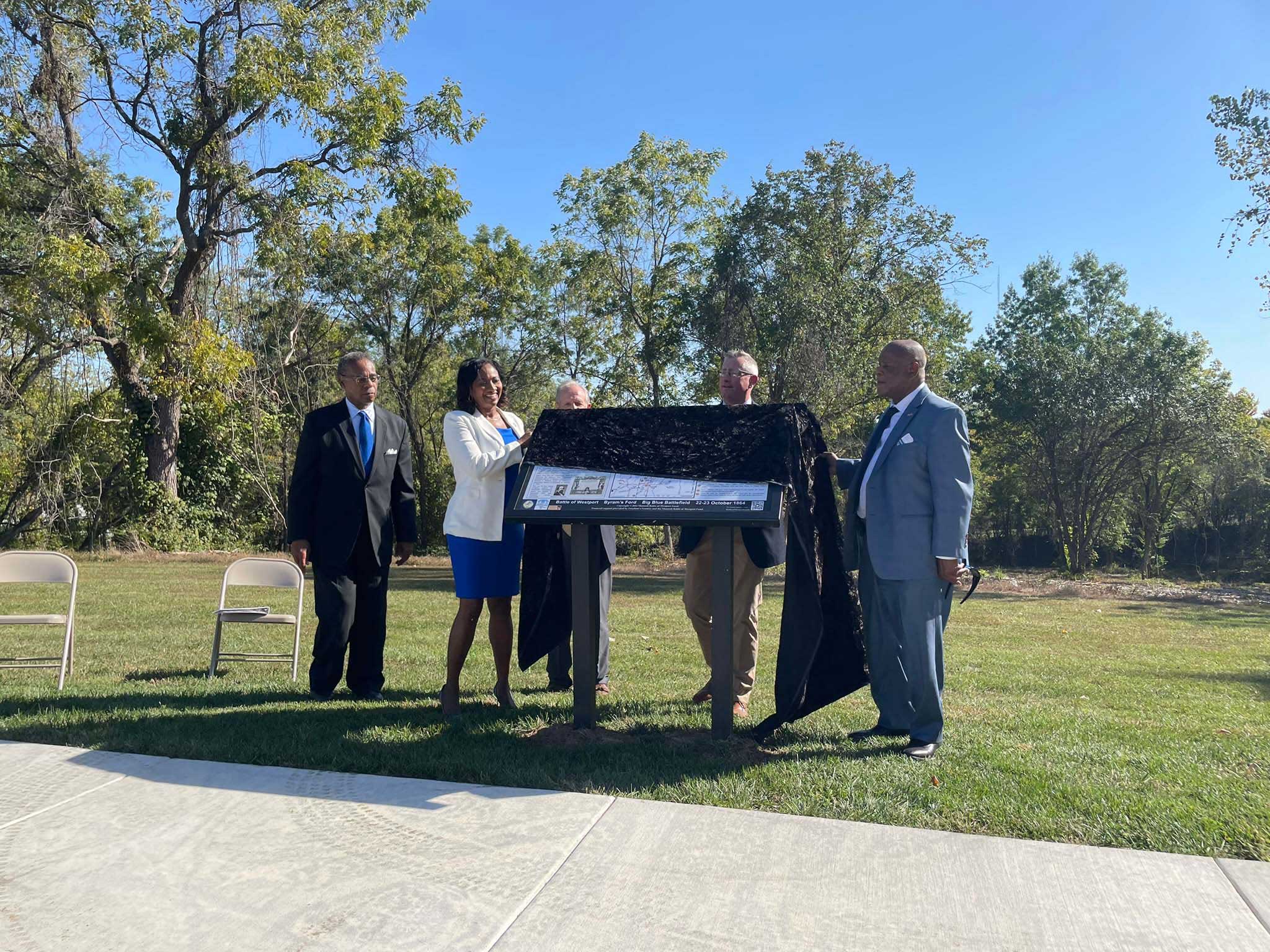
The marker addresses that the Union victory at Westport led a few weeks later to the 1864 election and the resulting adoption of the Missouri Emancipation Ordinance. It also describes a notable figure from the battle, Lt. Patrick Henry Minor, an African American, (1829-1865) commanding Douglas’ Independent Colored Battery, the first regularly commissioned Black officer to command Black troops in combat on 22 and 23 October 1864.
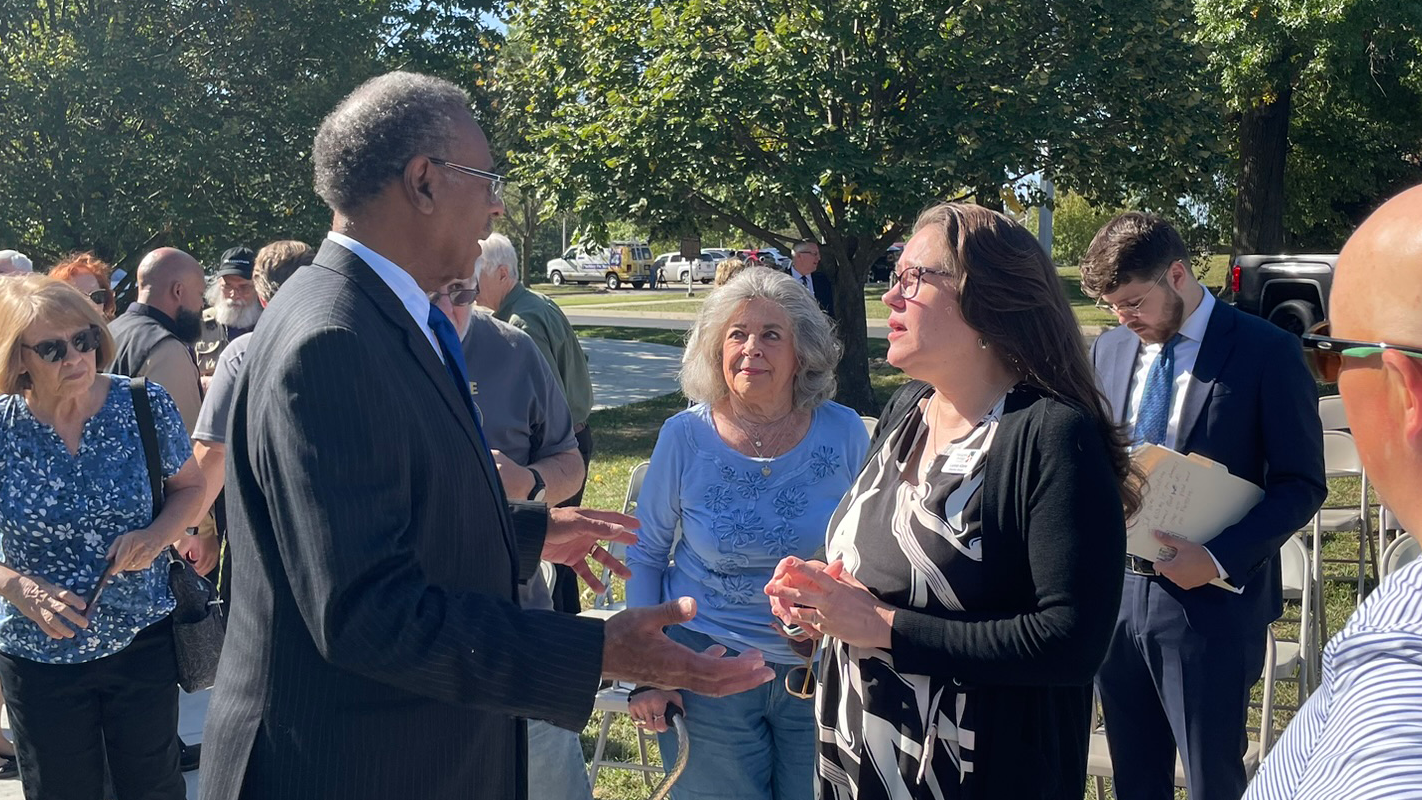
This ceremony also highlighted the many improvements, including the walking trail over the field, which the Parks Department has made for the greatly improved interpretation of the battlefield, as well as the launch of the latest phase of the Battle of Westport Fund’s Saving Kansas City’s Battlefield initiative for raising an additional $1,000,000 for further land acquisition and improvements on the battlefield.
The public is invited to see the new markers at the upcoming Battle of Westport 160th Commemoration on Saturday, October 19, 2024.
The Battle of Westport of October 21-23, 1864 was the largest battle fought west of the Mississippi River, stretching seven miles from east to west and five miles from north to south. The battle involved over 32,000 troops on the outskirts of the village of Westport lying on the turbulent border between Missouri and Kansas. It marked the climax to a decade of war beginning with the Kansas-Nebraska Act in 1854. Westport is one of only two battles in Missouri designated by the National Park Service as a Class “A” battlefield, reserved only for those with “a decisive influence on a campaign and a direct impact on the course of the war.”
The marker addresses that the Union victory at Westport led a few weeks later to the 1864 election and the resulting adoption of the Missouri Emancipation Ordinance. It also describes a notable figure from the battle, Lt. Patrick Henry Minor, an African American, (1829-1865) commanding Douglas’ Independent Colored Battery, the first regularly commissioned Black officer to command Black troops in combat on 22 and 23 October 1864.
This ceremony also highlighted the many improvements, including the walking trail over the field, which the Parks Department has made for the greatly improved interpretation of the battlefield, as well as the launch of the latest phase of the Battle of Westport Fund’s Saving Kansas City’s Battlefield initiative for raising an additional $1,000,000 for further land acquisition and improvements on the battlefield.
The public is invited to see the new markers at the upcoming Battle of Westport 160th Commemoration on Saturday, October 19, 2024.
The Battle of Westport of October 21-23, 1864 was the largest battle fought west of the Mississippi River, stretching seven miles from east to west and five miles from north to south. The battle involved over 32,000 troops on the outskirts of the village of Westport lying on the turbulent border between Missouri and Kansas. It marked the climax to a decade of war beginning with the Kansas-Nebraska Act in 1854. Westport is one of only two battles in Missouri designated by the National Park Service as a Class “A” battlefield, reserved only for those with “a decisive influence on a campaign and a direct impact on the course of the war.”
Freedom’s Frontier National Heritage Area (FFNHA) builds awareness of struggles for freedom in western Missouri and eastern Kansas. Established by Congress in 2006, FFNHA covers a unique physical and cultural landscape across 41 counties and 31,000 square miles. It promotes three diverse, interwoven, and nationally significant stories: frontier settlement, the Missouri-Kansas Border War and Civil War, and enduring civil rights disputes. FFNHA inspires respect for multiple perspectives and empowers area residents to preserve and share these stories, achieving its goals through interpretation, preservation, conservation, and education for all residents and visitors. It is one of 62 federally recognized national heritage areas across the United States.